Arbutin CAS#497-76-7
In Stock · Ready to Ship

Certifications & Standards

FDAEUISOGMPHACCPKosherHalal

Arbutin CAS#497-76-7

Arbutin, a derivative of hydroquinone, is a naturally occurring compound extracted primarily from the bearberry plant (Arctostaphylos uva-ursi). It is renowned in the skincare industry for its skin lightening properties, making it a popular ingredient in cosmetic products designed to reduce hyperpigmentation and even out skin tone. Chemically, arbutin is ??-glucosiduronic acid of hydroquinone, with the molecular formula C12H12O7. Its mechanism of action involves the inhibition of tyrosinase, a key enzyme in the melanin biosynthesis pathway. By reducing melanin production, arbutin effectively lightens the skin without the risk of irritation often associated with hydroquinone. Arbutin is valued for its safety profile, as it is considered less irritating and more stable compared to other skin lightening agents. It is also known for its antioxidant properties, which contribute to its skin brightening effects and overall skin health benefits. <p class="last-node">In summary, arbutin is a reliable and gentle alternative for skin lightening, offering a natural approach to reducing pigmentation issues while promoting a more radiant and even complexion. Its use in skincare formulations is favored for its efficacy and mildness, making it suitable for various skin types.</p>

Product Specifications

Contact us for detailed specifications
Certified Quality
48hr Sample Dispatch
COA & MSDS Provided

Product Description

Arbutin, a derivative of hydroquinone, is a naturally occurring compound extracted primarily from the bearberry plant (Arctostaphylos uva-ursi). It is renowned in the skincare industry for its skin lightening properties, making it a popular ingredient in cosmetic products designed to reduce hyperpigmentation and even out skin tone.

Chemically, arbutin is ??-glucosiduronic acid of hydroquinone, with the molecular formula C12H12O7. Its mechanism of action involves the inhibition of tyrosinase, a key enzyme in the melanin biosynthesis pathway. By reducing melanin production, arbutin effectively lightens the skin without the risk of irritation often associated with hydroquinone.

Arbutin is valued for its safety profile, as it is considered less irritating and more stable compared to other skin lightening agents. It is also known for its antioxidant properties, which contribute to its skin brightening effects and overall skin health benefits.

In summary, arbutin is a reliable and gentle alternative for skin lightening, offering a natural approach to reducing pigmentation issues while promoting a more radiant and even complexion. Its use in skincare formulations is favored for its efficacy and mildness, making it suitable for various skin types.

Description

Melting point 195-198???C
Boiling point 375.31??C (rough estimate)
alpha -64 o (c=3)
density 1.3582 (rough estimate)
refractive index -65.5 ?? (C=4, H2O)
storage temp. Inert atmosphere,Room Temperature
solubility H2O: 50?mg/mL hot, clear
form Solid
pka 10.10??0.15(Predicted)
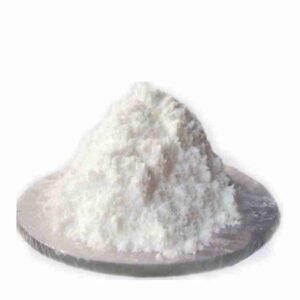
color White
optical activity [??]/D -64.0??2.0??, c = 3 in H2O
Water Solubility 10-15 g/100 mL at 20 oC
Sensitive Hygroscopic
Merck 14,773
BRN 89673
Stability: Stable. Hygroscopic – store under dry nitrogen.
InChIKey BJRNKVDFDLYUGJ-RMPHRYRLSA-N
LogP -1.350
CAS DataBase Reference 497-76-7(CAS DataBase Reference)
EPA Substance Registry System .beta.-D-Glucopyranoside, 4-hydroxyphenyl (497-76-7)
Safety Information
Hazard Codes Xn
Risk Statements 20/21/22-36/37/38
Safety Statements 22-24/25-36-26
WGK Germany 3
RTECS CE8863000
F 3-10-23
HS Code 29389090
Hazardous Substances Data 497-76-7(Hazardous Substances Data)

Related Tags

Request a Sample or Quote

Interested in
Arbutin CAS#497-76-7?

Fill in the form and our team will respond within 24 hours with product samples, full certification documents (COA/MSDS), and a competitive price quote.

Submitting...

By submitting this form you agree to be contacted by BuyChemic regarding your inquiry. We respect your privacy and will never share your information.

Related Products

You may also be interested in these products

Tetraacetylethylenediamine CAS#10543-57-4

Tetraacetylethylenediamine is a fully acetylated derivative of ethylenediamine, offering a high reactivity as an intermediate in organic synthesis. Its unique structure makes it a critical component in the production of specialty chemicals and pharmaceuticals, ensuring a wide range of applications in the chemical industry.

View Details

Puerarin CAS# 3681-99-0

<span style="color: #0066cc;">Puerarin, also known as pueraria flavonoids, is a kind of flavonoid glycoside extracted from the roots of Pueraria alba or Pueraria thomsonii and is also one of the main effective ingredients of Pueraria lobata. That Pueraria lobate was used to treat diseases has already been recorded in China??s ancient medical books such as Shen Nong??s Materia Medica, Treatise on Miscellaneous Diseases and Medical Dictionary. Kanzu root is widely distributed in our country and of rich resources. It has been reported that puerarin could be extracted from Pueraria lobata (Wild.) Ohwi, Radix Pueraria thomsonii, Pueraria omeiensiswanget Tang, Pueraria edulis Pamp and Pueraria phaseoloides, but the content of puerarin differs. Pueraria has a great value for nutrition and medicine and was considered the south ginseng of China. Puerarin has been widespread concerned over our country for its use of food and medicine in recent years.</span>

View Details

2-Methyl-4-isothiazolin-3-one CAS#2682-20-4

2-Methyl-4-isothiazolin-3-one, commonly referred to as MI, is a potent, synthetic preservative widely used in the cosmetic and personal care industry. This organic compound, with the chemical formula C4H5NOS, is a member of the isothiazolinone family known for its broad-spectrum antimicrobial activity. MI is effective against a variety of microorganisms, including bacteria, yeasts, and molds, making it an ideal preservative for formulations that require protection from spoilage and contamination. It is particularly valued for its ability to provide long-lasting protection even at low concentrations. As a preservative, MI is recognized for its compatibility with a wide range of cosmetic ingredients and its ability to be used in leave-on and rinse-off products. Its stability in different pH ranges and resistance to heat and light further contribute to its utility in various formulations. <p class="last-node">In summary, 2-Methyl-4-isothiazolin-3-one is a reliable and efficient preservative, offering robust antimicrobial protection for a diverse array of products. Its versatility and effectiveness make it a preferred choice for maintaining the integrity and safety of cosmetic and personal care products.</p>

View Details