How to Request and Evaluate Additive-Free Samples from Chinese Peptide Suppliers?
I used to think additive-free claims were simple quality promises. Then I spent three years handling purity complaints and third-party retest disputes at a Chinese peptide supplier. Most buyers request samples with the same mistake: they treat "additive-free" as proof of purity, then get shocked when batch orders fail regulatory testing or show different impurity profiles.
Additive-free is a manufacturing disclosure, not a purity measurement. Your sample evaluation strategy must verify whether the supplier can detect impurities relevant to your use case, maintain batch consistency, and provide documentation that survives regulatory scrutiny—asking for a high HPLC number alone tells you almost nothing about these risks.

Here's the problem: Chinese peptide suppliers operate at wildly different quality control levels, but their COAs often look equally professional on paper. The sample you test might be perfect. The production batch you order might contain residual solvents your contract manufacturer rejects. I have seen this sequence destroy procurement timelines dozens of times, and it always starts with the wrong sample evaluation questions.
What Does Additive-Free Actually Mean in Chinese Peptide Manufacturing?
I need to clarify this term first because buyers often misunderstand what they are requesting. When you ask for additive-free samples, you are not asking for 100% pure peptides.
Additive-free means the supplier synthesized the peptide without intentional excipients like mannitol, dextrin, or other bulking agents commonly used to standardize product weight or improve handling properties. It tells you the supplier is selling you crude or purified peptide material, not a pre-formulated blend—but it does not define impurity levels, purity testing methodology, or batch consistency standards.
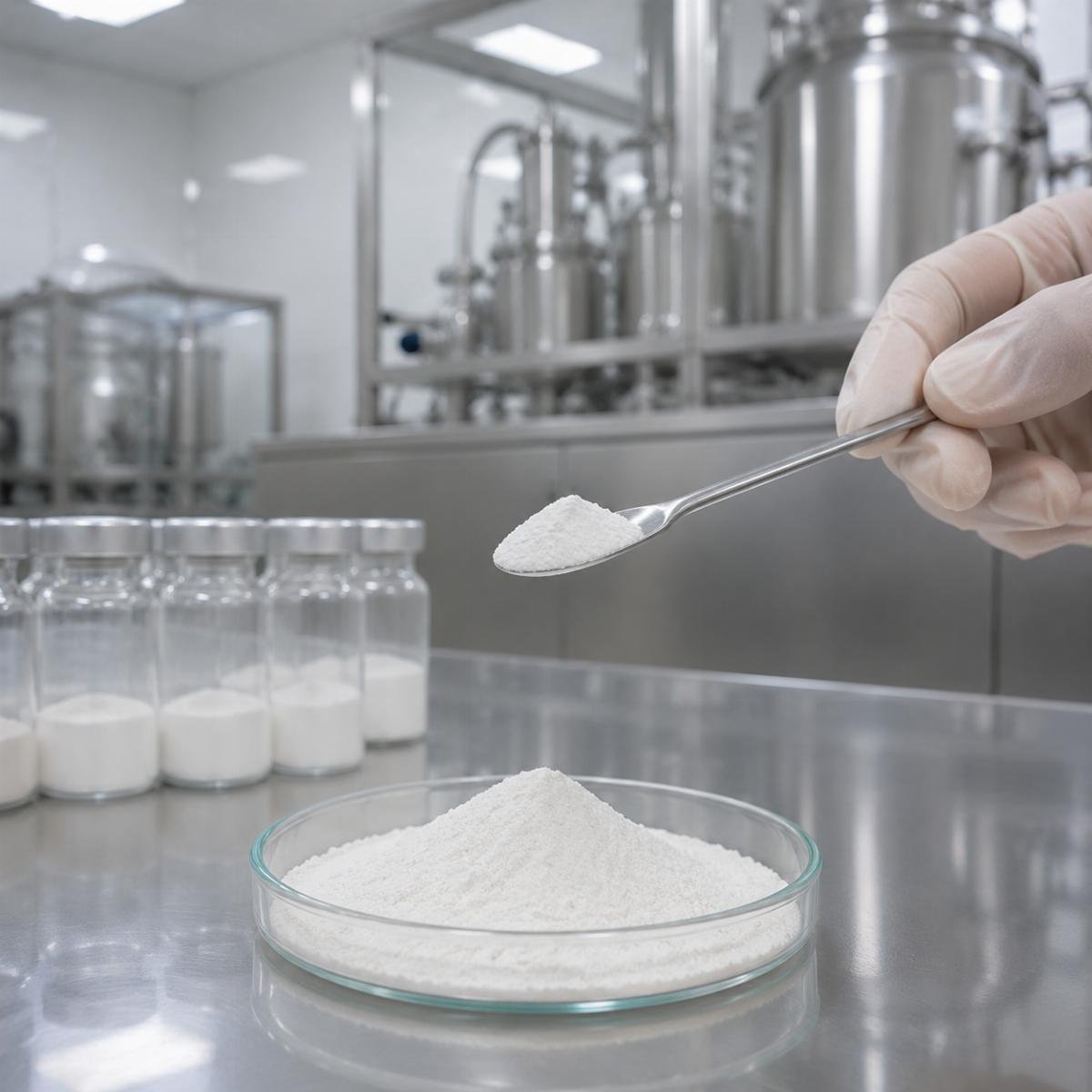
Many Chinese suppliers use "additive-free" as a quality signal to suggest higher purity. This creates confusion. A peptide with 95% HPLC purity can be additive-free. A peptide with 98% HPLC purity using a different testing method might contain residual TFA that the first method does not detect. Both suppliers can claim additive-free status, but your downstream formulation or regulatory filing might only work with one of them.
I have coordinated retests where two suppliers provided 98% HPLC COAs for the same peptide. Third-party testing revealed one sample contained 1.2% residual acetonitrile. The other contained 0.8% TFA and trace DMSO. Both COAs were technically accurate under their respective HPLC conditions, but the impurity profiles created completely different formulation risks. The buyer who trusted the COA numbers without asking about detection methods wasted four weeks and paid for reformulation trials.
Why Buyers Confuse Additive-Free Status with Absolute Purity
This confusion happens because HPLC purity is reported as a percentage. Buyers see 98% and assume the remaining 2% is measurement noise or trace water. In reality, that 2% contains specific impurities your application might not tolerate—residual solvents, deletion sequences, acetylated variants, or synthesis byproducts.
When you request additive-free samples, you are eliminating intentional fillers, but you are not eliminating synthesis-related impurities. Those impurities depend on synthesis quality, purification rigor, and whether the supplier's HPLC method can even detect them. Additive-free status tells you nothing about these variables.
Reputable suppliers typically separate these concepts in their documentation. They state "no added excipients" in the product specification sheet, then provide detailed impurity analysis in the COA. Lower-quality suppliers conflate the terms because buyers do not ask for distinction. I have seen suppliers advertise "additive-free 99% purity" as if the two claims validate each other, when in fact they describe unrelated manufacturing choices and measurement outcomes.
How Should I Request Samples That Reveal Real Quality Differences?
Your sample request email determines what you can verify later. Most buyers send generic requests like "Please send 10g sample of Semaglutide, additive-free, 98% purity minimum." This request does not give you the information needed to evaluate whether the sample represents consistent manufacturing capability.
A properly structured sample request specifies your intended use case, asks what the supplier's HPLC method can detect, requests method validation documentation, and establishes whether the sample comes from a representative production batch or is prepared separately for showcase purposes.
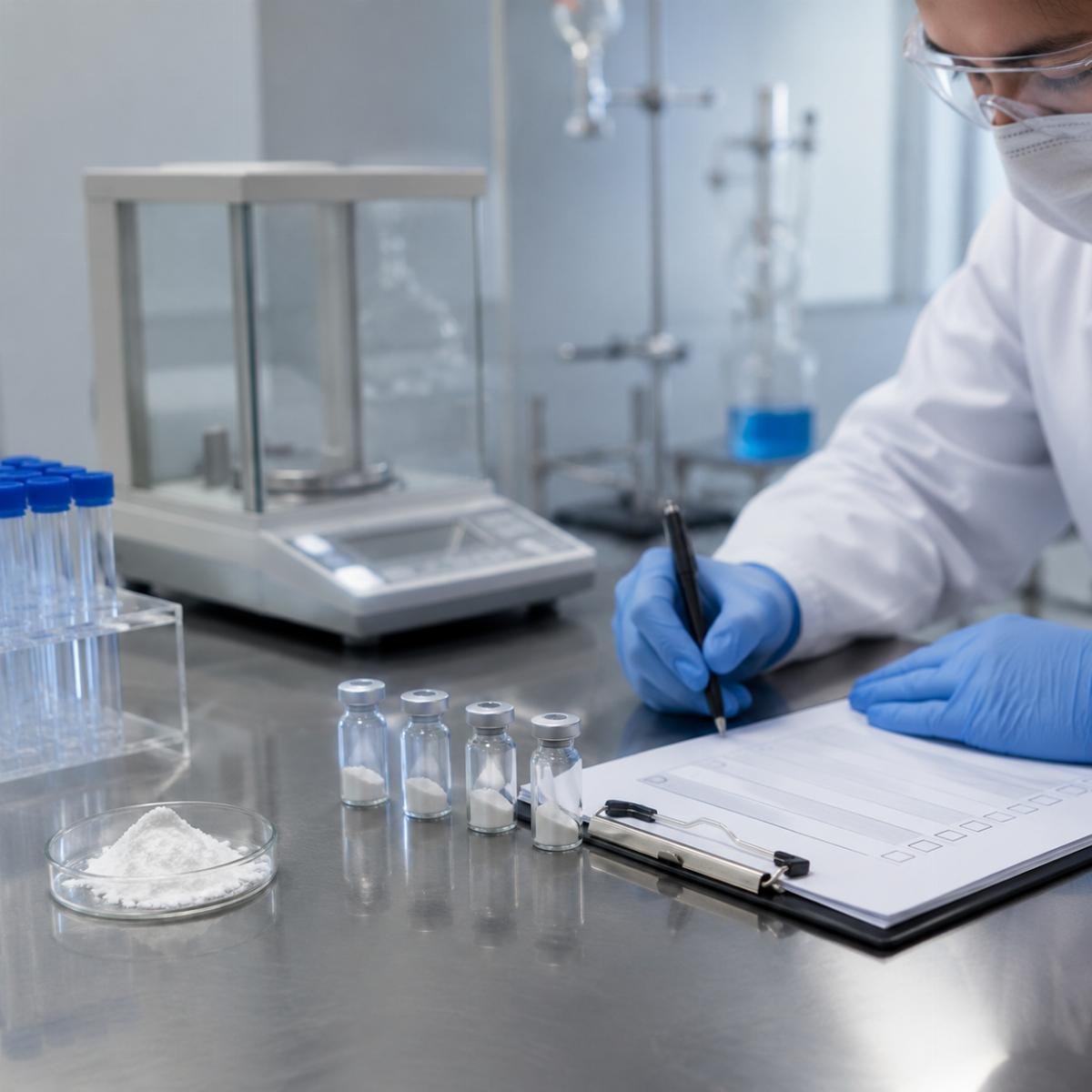
I recommend structuring your request around four verification points. First, state your application clearly—pharmaceutical API, medical aesthetic ingredient, supplement formulation, or research reagent. This forces the supplier to acknowledge whether their manufacturing standards match your regulatory or safety requirements. Second, ask what impurities the supplier's HPLC method detects and whether they can provide chromatograms showing separation of known deletion sequences or acetylated variants. Third, request batch-to-batch variance data for purity and key impurities over the last six months. Fourth, clarify whether the sample comes from regular production inventory or is specially prepared for customer evaluation.
What Questions Reveal Whether the Supplier Can Maintain Sample Quality at Scale
The gap between sample quality and production batch quality is where most sourcing failures occur. Chinese peptide suppliers face different incentives when preparing customer samples versus manufacturing bulk orders. Samples are low-volume, high-visibility opportunities to win contracts. Production batches are cost-sensitive, timeline-driven operations where minor process shortcuts might not immediately show up in basic HPLC testing.
I have coordinated disputes where buyers approved samples based on third-party COAs, then received production batches that failed the same third-party lab's testing. The supplier did not intentionally defraud anyone. Their sample came from a tightly controlled synthesis run with extra purification cycles. Their production batch followed standard procedures that normally yield acceptable purity—but environmental humidity during that particular synthesis run caused incomplete TFA removal, and their in-house HPLC method did not flag it.
You cannot eliminate this risk entirely, but you can reduce it by asking whether the sample represents typical production output. Specifically, ask if the sample comes from a batch the supplier already sold to other customers. Ask how many batches they produce per month and what their historical rejection rate is. Ask if they can provide COAs from three recent production batches showing consistent purity and impurity profiles. Suppliers who maintain genuine quality control can answer these questions with documentation. Suppliers who prepare showcase samples for evaluation cannot.
How Do I Verify the COA Without Running My Own HPLC Test
Third-party testing is expensive and slow. Most buyers want to make preliminary supplier decisions based on the COA the supplier provides. This is reasonable if you know what the COA can and cannot tell you.
A COA from a Chinese peptide supplier typically reports HPLC purity, peptide content by UV absorption, and sometimes water content or residual solvent levels. The HPLC purity number is what buyers focus on, but it is also the most misleading figure without context. HPLC purity reflects how well the peptide peak separates from detected impurities under specific column, gradient, and wavelength conditions. Different HPLC methods yield non-comparable results. A 98% purity reading using a C18 column with a shallow acetonitrile gradient might become 95% purity using a C4 column with a steeper gradient that better resolves deletion sequences.
I recommend asking the supplier to provide their HPLC method parameters in the COA or as a separate document. Look for column type, mobile phase composition, gradient profile, flow rate, detection wavelength, and injection volume. If the supplier cannot provide this information, treat their COA as preliminary and plan for third-party verification. If they can provide it, compare the method to USP or EP monograph methods for similar peptides. Methods that use broader gradients or single-wavelength detection might miss impurities that your regulatory or formulation work requires you to control.
What Documentation Should I Request Beyond the Basic COA?
Most buyers stop at the COA. This is a mistake because the COA only documents one measurement of one sample. Your sourcing decision depends on whether the supplier can reproduce that quality, detect the impurities that matter to your use case, and provide documentation that regulatory authorities or downstream partners will accept.
Reputable suppliers can provide method validation data showing their HPLC system accurately detects known impurities, batch manufacturing records proving traceability, stability testing data if you need shelf-life claims, and reference standard documentation if you plan to use their material for assay development or quality control.
Method validation data is critical for pharma buyers preparing registration filings. Regulatory authorities want proof that your analytical method can detect and quantify impurities that might arise during synthesis or storage. If your peptide supplier cannot show they validated their HPLC method against known impurity standards, you will need to perform this validation yourself—or worse, discover during regulatory review that your supplier's purity claims lack analytical support.
I have seen buyers spend six months preparing IND submissions using supplier COAs, only to have FDA request method validation data the supplier could not provide. The buyer had to re-source the peptide from a different supplier with proper documentation, then repeat formulation and stability studies. The cost was not just money and time—it was lost competitive advantage because a rival product reached clinical trials first.
How Do I Assess Batch-to-Batch Consistency Risk
Consistency risk is higher with Chinese peptide suppliers than with established Western manufacturers, but it varies dramatically between suppliers. Some Chinese suppliers operate GMP-certified facilities with batch record systems and statistical process control. Others operate in shared industrial parks with minimal quality oversight and prepare COAs based on occasional spot testing.
You can assess this risk by requesting batch production records for three to five recent batches of the same peptide. Look for consistent purity readings within 1-2% across batches, similar impurity profiles, and stable residual solvent levels. If the supplier shows you five batches with purity ranging from 96% to 99.5%, they do not have process control. If they show you five batches with purity between 97.8% and 98.4% and similar impurity peaks in the chromatograms, they probably do.
Some suppliers will tell you they cannot share batch records from other customers due to confidentiality. This is sometimes legitimate, especially if they supply pharmaceutical clients. In that case, ask if they can provide anonymized data with customer names and order details removed. If they refuse this too, increase your verification requirements or plan more frequent incoming inspections after contracting.
What Regulatory Documentation Gaps Should I Anticipate
Chinese peptide suppliers typically provide COAs, Material Safety Data Sheets, and sometimes Certificates of Analysis from third-party labs. What they often cannot provide is documentation formatted for regulatory submissions—Drug Master Files, GMP audit reports, detailed impurity characterization studies, or mutagenicity testing data.
If you are a pharmaceutical buyer, clarify early whether the supplier can support DMF filing or provide the raw data you need to prepare your own regulatory submission. Many Chinese suppliers do not maintain documentation at this level because their primary customers are supplement manufacturers or medical aesthetic formulators with less stringent requirements. Discovering this gap after you commit to a supplier delays your project significantly.
Medical aesthetic buyers face different documentation challenges. Many countries require ingredient suppliers to provide safety assessments or toxicology summaries for cosmetic formulations. Chinese peptide suppliers rarely maintain this documentation unless they specifically target the cosmetic market. You will need to generate it yourself or work with a regulatory consultant, which adds cost and timeline risk.
Supplement manufacturers need labeling compliance documentation. If you plan to market a peptide-containing supplement in the US, you must ensure your ingredient supplier can provide documentation supporting Generally Recognized as Safe status or otherwise meets dietary supplement regulations. Many Chinese suppliers cannot navigate this distinction and will provide pharmaceutical-grade COAs that do not address GRAS or supplement-specific requirements.
How Do I Evaluate Whether the Sample Matches My Formulation Requirements
Purity and documentation are necessary but not sufficient for sourcing decisions. Your peptide sample must work in your formulation, and Chinese peptide suppliers often lack the formulation development experience to advise you on compatibility issues.
The key formulation variables are residual solvent content, residual TFA or other counter-ions, moisture content, particle size distribution if you are preparing suspensions, and pH of reconstituted solutions. Suppliers often optimize synthesis for purity rather than these parameters, so you must specify your formulation constraints explicitly.

Residual TFA is the most common formulation problem I encounter. Many Chinese suppliers purify peptides using TFA-containing mobile phases because TFA improves peak resolution and accelerates purification. The final product contains trace TFA as a counter-ion. This is chemically stable and generally safe, but it causes problems in certain formulations. TFA lowers solution pH, which can destabilize pH-sensitive active ingredients in multi-component formulations. TFA can interfere with mass spectrometry analysis if you use the peptide for assay development. TFA limits solubility in some organic solvents used for sustained-release formulations.
If your formulation is TFA-sensitive, specify this when requesting samples and ask the supplier to use alternative purification conditions. Reputable suppliers can perform acetate or chloride exchange to replace TFA counter-ions, but this adds cost and time. Lower-quality suppliers will agree to your request but not actually modify their process because they assume you will not test for TFA content. I recommend explicitly requesting TFA quantification in your COA if this matters to your application.
What Sample Size Should I Request and Why
Most buyers request 5-10 gram samples. This is usually enough for initial formulation trials and third-party testing, but it might not reveal stability issues or allow full characterization of impurity profiles. If you are developing a pharmaceutical product, consider requesting 50-100 grams to support formulation optimization, accelerated stability studies, and validation of your analytical methods. The extra cost is minor compared to the risk of discovering formulation or stability problems after you commit to a bulk order.
Larger samples also reveal whether the supplier can maintain quality at slightly higher production scales. A supplier who can prepare a perfect 10-gram sample but struggles with 100-gram batches has process scalability problems that will become critical when you order kilogram quantities.
What Red Flags Indicate I Should Reject the Supplier After Sample Evaluation
Some quality issues are correctable through supplier communication and process adjustments. Others indicate fundamental capability gaps that make the supplier unsuitable for your project.
Reject the supplier if they cannot provide HPLC method parameters, refuse to share batch consistency data, provide COAs with inconsistent formatting or missing information across different batches, cannot explain specific impurity peaks when questioned, or if third-party testing reveals impurities the supplier's COA did not detect and they cannot explain why their method missed them.

I have seen buyers ignore these red flags because the supplier offers significantly lower prices or faster lead times. This always creates problems later. A supplier who cannot explain their own analytical data does not understand their process. A supplier who refuses to share batch consistency data either has no consistency or knows their consistency is poor. A supplier whose COA formatting changes between batches is not using standardized quality control procedures.
The most dangerous red flag is when third-party testing reveals impurities the supplier did not detect. This sometimes happens legitimately if the third-party lab uses a more sensitive method. But if the supplier cannot explain why their method missed the impurity and cannot adjust their method to detect it going forward, they lack the analytical capability to support your quality requirements long-term.
How Should I Handle Minor Quality Issues Found in Sample Testing
Not every quality issue requires rejecting the supplier. Chinese peptide suppliers often have process flexibility and can adjust synthesis or purification parameters to meet specific requirements if you communicate clearly.
I recommend classifying issues into correctable process adjustments versus fundamental capability gaps. Slightly high water content, trace residual solvents within acceptable ranges but higher than ideal, or purity 0.5-1% below your target are usually correctable through additional drying, modified purification cycles, or adjusted synthesis conditions. Missing documentation, inability to explain analytical results, or large batch-to-batch variance indicate capability gaps that process adjustments cannot fix.
When you identify correctable issues, specify exactly what parameter needs adjustment and what your acceptance criteria are. For example, "Water content was 3.2% in the sample but our formulation requires below 2%. Can you perform additional lyophilization to reduce water content below 2% and provide a revised COA?" This approach helps the supplier understand your requirements without generic complaints about quality.
Conclusion
Additive-free samples only reveal supplier quality if you verify analytical capability, batch consistency, documentation completeness, and formulation compatibility—not just the purity number on the COA. Your sample evaluation strategy must address the specific risks your application faces, whether regulatory rejection for pharma projects or formulation failure for medical aesthetic or supplement products. The right questions transform supplier sample testing from a procurement formality into genuine risk management.